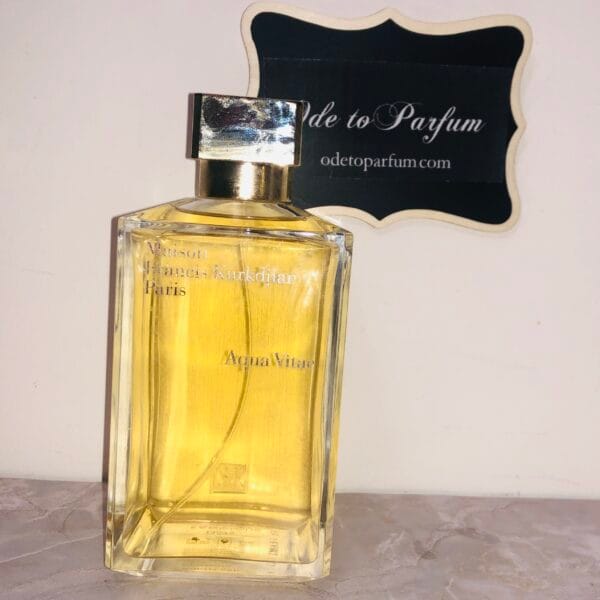
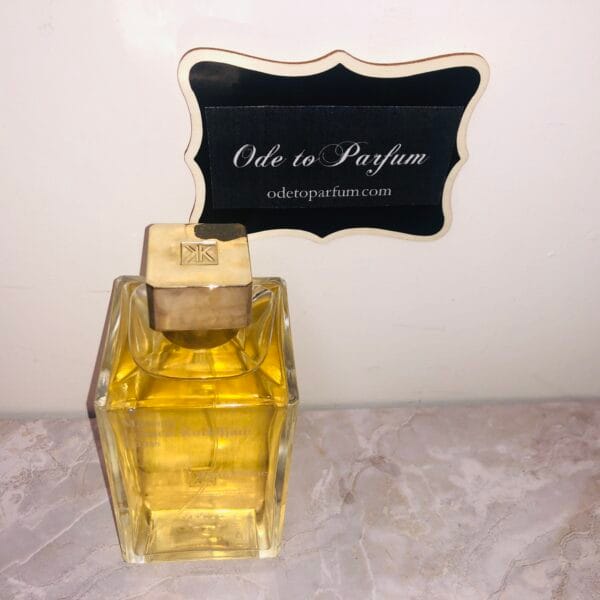
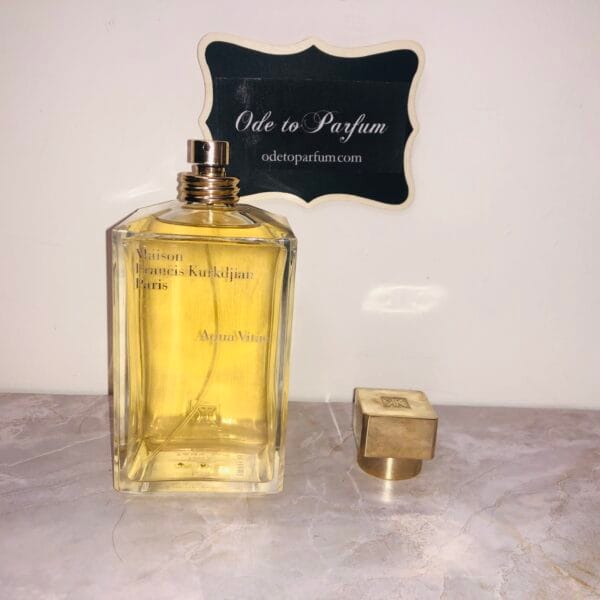
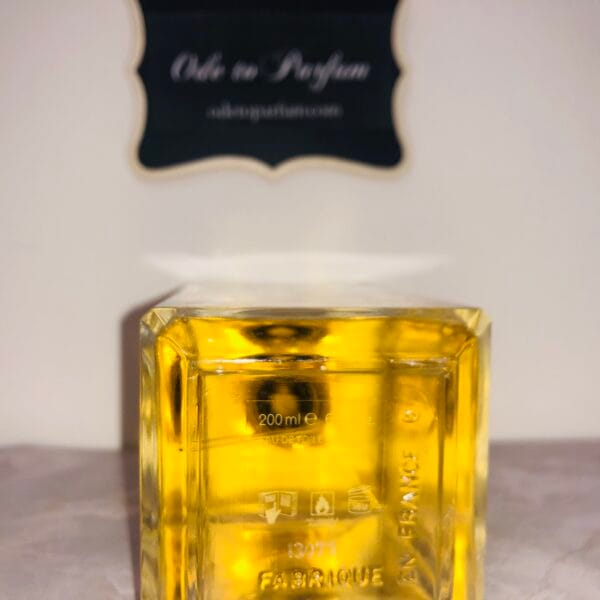
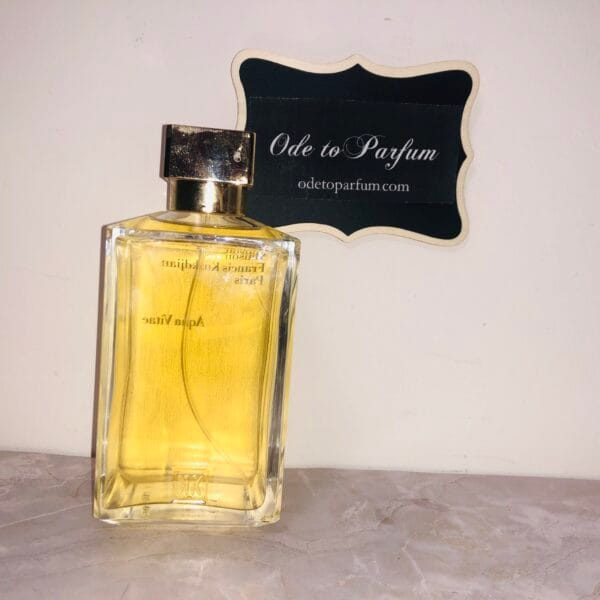
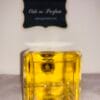
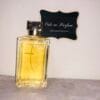

MFK Aqua Vitae eau de toilette spray by Maison Francis Kurkdjian
Launched in 2013
Original version, this 200ml was available in the first couple of years of Aqua Vitae’s release.
The art of fragrance made easy. Inspired by life itself, the Aqua Vitae Maison Francis Kurkdjian eau de toilette is sensually full-bodied by nature and delicate by essence. It scents the skin to become one with the wearer. This citrusy scent tickles the senses and wakes you with lemon, mandarins, hedione, vanilla absolute, tonka bean and gaiac wood. The delicious whisper of Aqua Vitae eau de toilette consumes the space between you and the other triggering an irresistible urge to plant tender kisses on the neck.
Sensual by nature and delicate by essence, Aqua Vitae is the olfactive link which gathers us. ~Francis Kurkdjian
Citron de Calabre – Mandarine de Sicile – Hédione – Bois de Guaiac – Infusion de Vanille – Fèves Tonka.
Charnelle par nature et délicate par essence, Aqua Vitae est à la fois fraîcheur et chahut des sens.
Mandarin
This Citrus reticulata was imported from Asia at the beginning of the 19th century. According to legend, its name came from its color, identical to the ceremonial dresses of Chinese Mandarins. The fragrant compounds contained in its peel are extracted by cold expression to obtain its oil. This variety has citrusy, zesty but also green, sweet and slightly sulphurous facets. This sparkling and joyful top note enhances a Cologne and energizes an ambery perfume.
Vanilla
Few people know this, but vanilla bean extract naturally has woody, leathery, almost animal accents. To smooth this dark side, Francis Kurkdjian has recreated his own vanilla accord. A more airy, gourmand and slightly spicy interpretation. The round, enveloping aspect comes mainly from vanillin, the main olfactory compound of vanilla, also used in food flavors for its particularly soft and sweet side. This accord brings comfort and sillage.
Guaiac wood
Its Latin botanical name Lignum vitae, meaning wood of life, is full of optimism. Due to its high density, this tree native to South America and the West Indies has long been used in industrial processes for its robustness. Its oil, which comes from the distillation of its trunk, is very versatile: warm and powerful, it evokes vetiver with its slightly spicy smokiness while adopting milky accents of sandalwood. Although it has not yet played a leading role in a perfume, guaiac wood is an ideal bonding agent between the other woody tenors in the middle and base accords.
Lemon
The lemon tree was introduced to the Mediterranean basin during the Crusades in the Middle Ages. Today, the regions of Calabria and Sicily in southern Italy are the main suppliers for perfumery. Its oil is obtained by cold expression of its peel using mechanical processes. Its bright color announces its joyful fragrance, with green, zesty, rising top notes. Its crisp, lively effect is often found in men’s colognes and eaux fraîches. It also gives a beautiful lift to floral sillages.
Tonka bean
This precious raw ingredient comes from the Dipteryx odorata, a tree endemic to Central America and northern South America. Local people have to go into the jungle to pick its ripe fruit once fallen to the ground. After macerating in alcohol and dried, it delivers its kernel, a wrinkled black bean, the tonka. It gradually develops its flavors, including those of its main aromatic molecule, coumarin: powdery, almondy with a freshly mown hay effect, tobacco, slightly honeyed and smoked. Its gourmand facet evokes a slightly vanilla-scented and sweetened shortbread tart. Its absolute, obtained by volatile solvent extraction, is one of the most sensual base notes.